Kitchen respraying
Spray painting kitchen cabinets — a new colour, not a new kitchen
Doors and drawer fronts collected, stripped back, primed and resprayed in the colour you choose, then refitted and adjusted. Around a third of the cost of replacing the same kitchen.
What is included
Everything from survey to refit
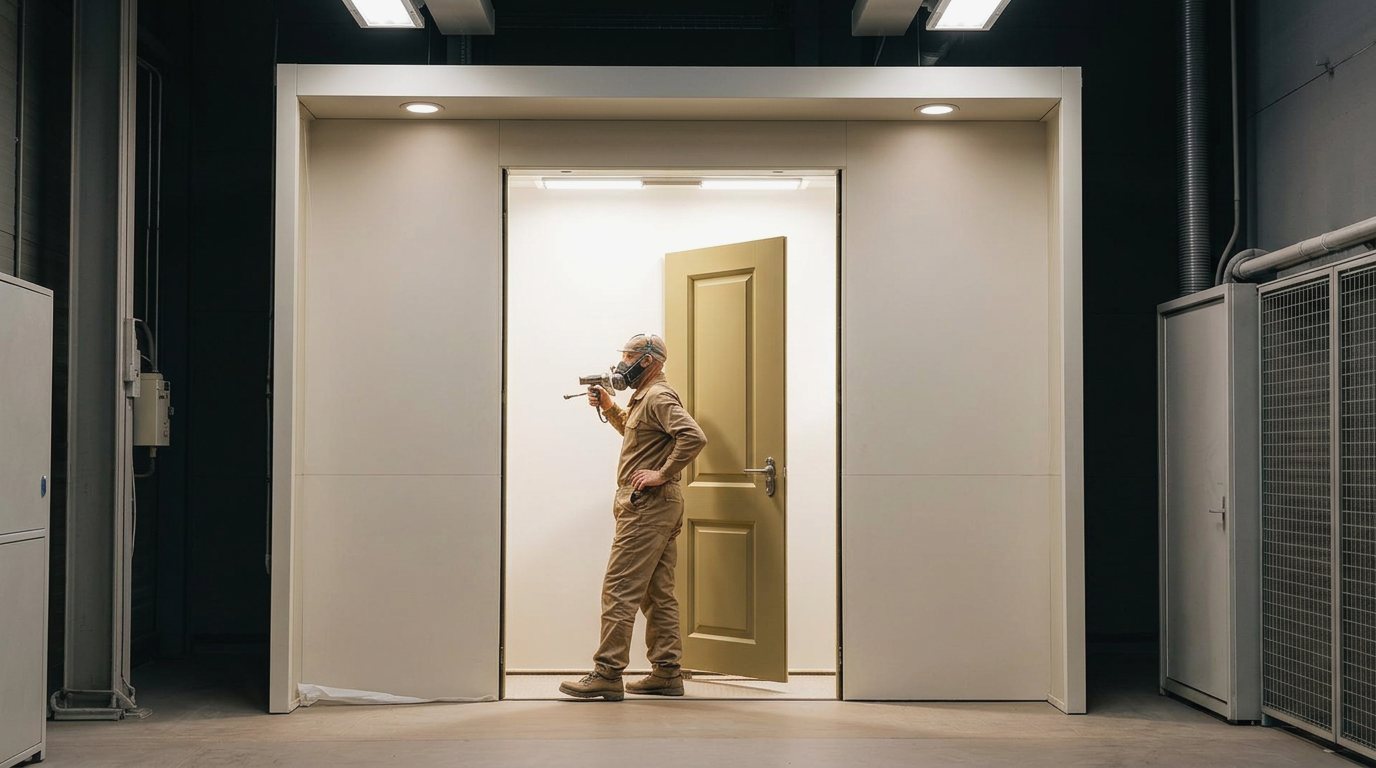
A resprayed kitchen only looks new if the preparation is right. Doors are labelled, stripped, repaired and flatted before any colour is laid, and the finish is cured in a booth rather than left to dry in a room full of dust.
Survey and colour
We check the doors, agree the colour and sheen, and spray a sample board for sign-off.
Removal
Doors, drawer fronts and cornice come off and are labelled so every piece goes back where it came from.
Strip and prepare
Old lacquer keyed or stripped, edges repaired, MDF fur sealed, everything flatted.
Prime and coat
The right primer for the material, then two-pack colour laid in a filtered booth.
Cure
Controlled cure so the finish is hard before anything is handled or stacked.
Refit
Hung back on adjusted hinges, gaps evened up, handles refitted, kitchen usable again.
Finishes
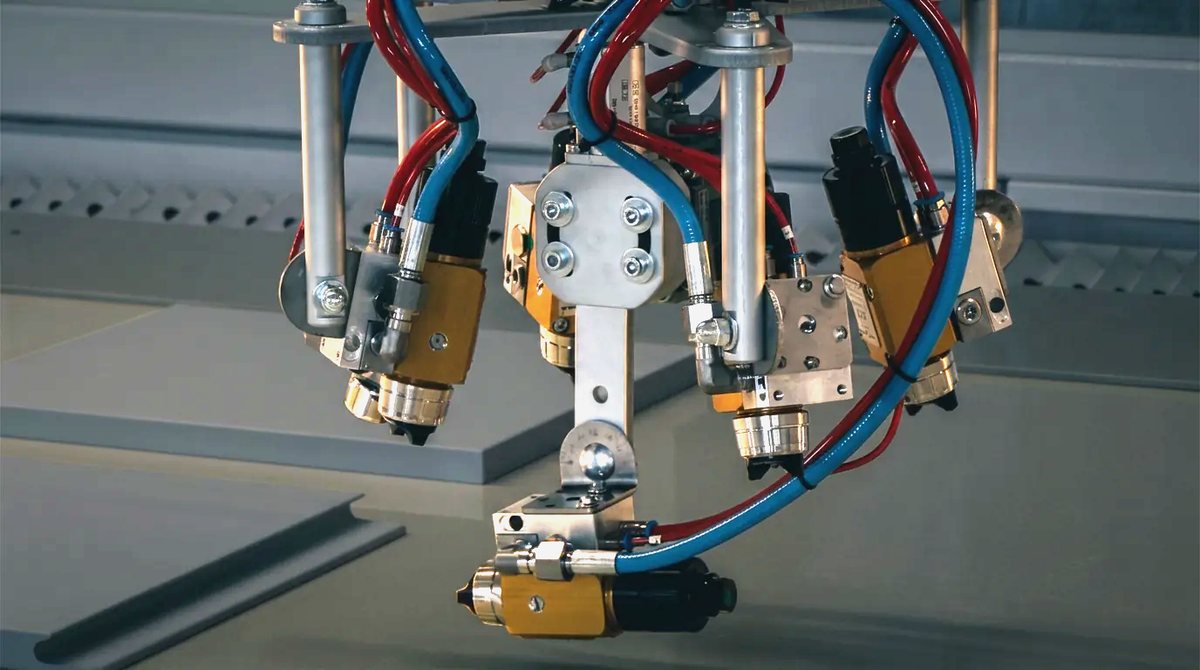
Matt, eggshell, satin or gloss
Dead matt
Velvet to the touch and forgiving in daylight, popular on darker colours.
Eggshell
The usual choice for kitchens — wipes clean, hides everyday handling.
Satin
A soft reflection that lifts smaller rooms without showing every mark.
High gloss
Flatted and polished to a mirror, best on flat slab doors.
Common questions
Cost, timing and wear
- How much does it cost to respray a kitchen?
- Most kitchens land between £1,800 and £4,500 depending on door count, material and finish. That is typically a third of the cost of replacing the same kitchen.
- How long is my kitchen out of action?
- The kitchen stays usable throughout. Only the doors and fronts leave — carcasses stay in place — and they are normally back on within five to eight working days.
- Can you respray a vinyl-wrapped or melamine kitchen?
- Yes. Peeling vinyl is removed and the door underneath is sealed; melamine is degreased and given an adhesion primer. Doors too far gone are quoted as replacements before we start.
- Will it chip around the handles?
- Two-pack lacquer cured in a booth is far tougher than brush-applied paint and is the same system used on new kitchen manufacture. Normal cleaning will not mark it.
- Can you spray the kitchen in place?
- Carcass frames and end panels are hand-finished on site where needed, but doors and fronts always come to the booth. Spraying doors in a lived-in room never gives a flat, dust-free surface.
We also handle furniture spray painting and wardrobe and door spraying.